


Purple Alert!

As we enter the time known as "the dearth" by beekeepers, one very noticeable plant is flowering—the purple loosestrife (Lythrum salicaria). This attractive plant is thought to have been introduced to North America in the early 1800s in ballast water discharged by ships. It reportedly began naturalizing on its own before being cultivated and sold as a garden plant, which significantly expanded its range.
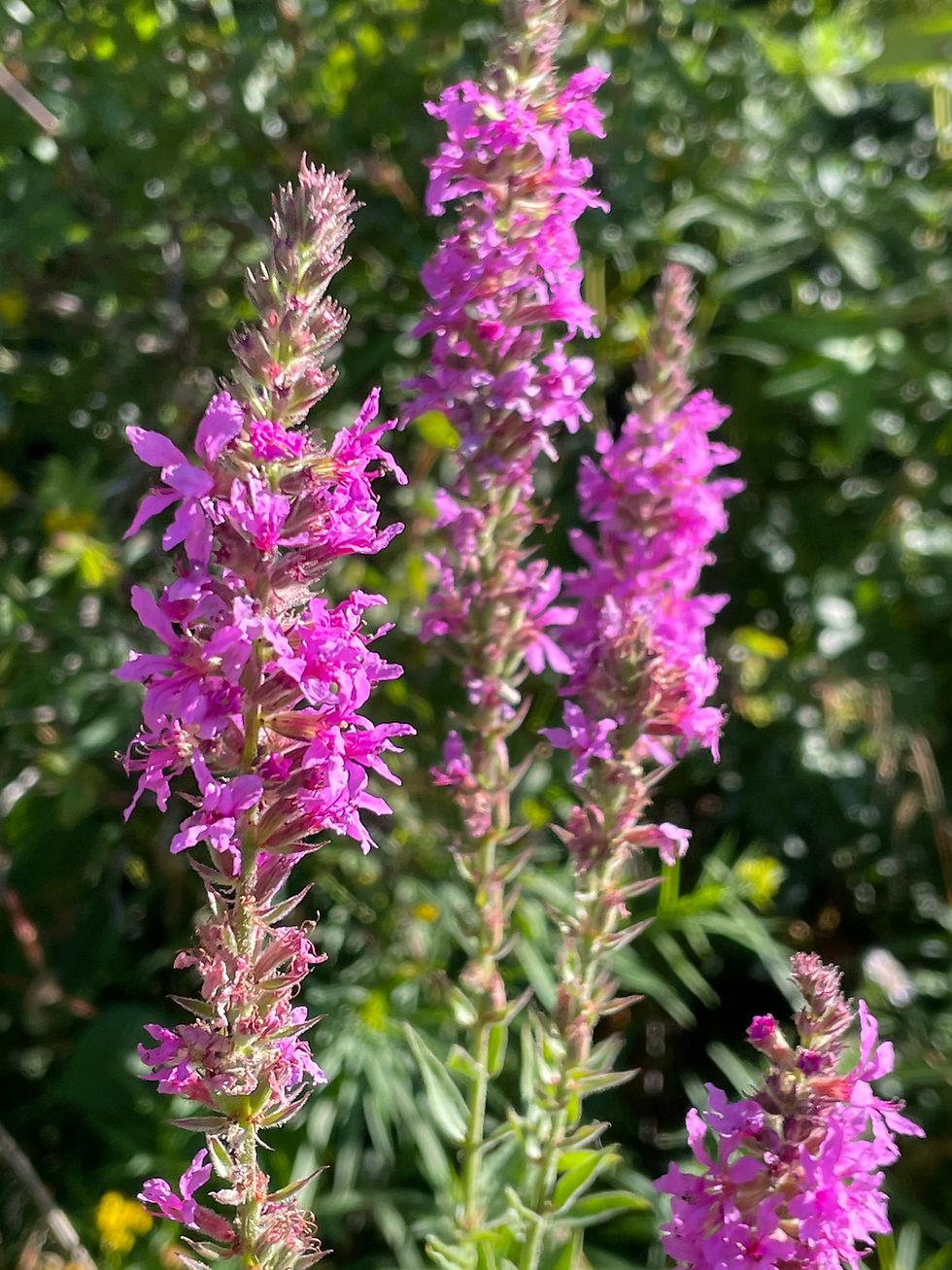
Today we see it spreading along roadsides, mainly in drainage areas with conditions similar to its native wetland habitat in Europe and Asia. Further south and in the Midwest, it has largely taken over expansive wetland areas and is classified as a noxious weed in 29 states and 2 Canadian provinces. It is also on the Maine Do Not Sell Invasive Plant List. Purple loosestrife has many adaptations that make it successful, but the important one for this time of year is that it is fecund. I had heard of the incredible number of seeds one plant can produce, so I looked it up and found that a mature plant with 30 stems can produce more than 2.5 million seeds in one season! Source: https://research.fs.usda.gov/feis/species-reviews/lytsal
To be sure you have the right plant, look for opposite leaves along the stem and smaller branches originating from the junction of the leaf and the squarish stem.
Here’s where you come in. While the plants are still visible and flowering, this is a great time to clip and bag the flowers and seed heads before the seeds mature and disperse. I like to use rugged paper or plastic bags to collect the clippings before taking them to the transfer station where they will ultimately be incinerated. Use caution if you let the seed heads dry in the bag. If it springs a leak a few million seeds could easily escape before disposal!

Our friends at the Surry Garden Club will be tagging clipped stems for removal by pulling or digging later when temperatures wane. When pulling or digging out entire stems that have had their flower heads removed, try to get as much root as possible. For disposal, it is best to make sure the stems are not left lying on the ground. If you need to leave them on site, hang them up in nearby foliage to prevent them from contacting the soil as they may be able to put down new roots into moist soil if conditions are right. Collecting the pulled stems and disposing or letting them dry completely on a tarp will also work. Once completely dry they shouldn’t be able to revive even in perfect conditions.

Rather than watch this plant march down our roadways and into our wetlands, let’s work together to at least reduce its spread by removing the seeds. If you have energy, ambition, and permission, go ahead and remove the whole plant. And, if you are worried about the dearth for our native bees and other nectar seekers, come to the Native Gardens plant sale on September 12 from 9–noon and pick up some Joe-Pye weed (Eutrochium spp.), fall sneezeweed (Helenium autumnalis), mountain mint (Pycnanthemum spp.), or blue lobelia (Lobelia siphylitica), all of which are among the many other native species blooming now!


Comments